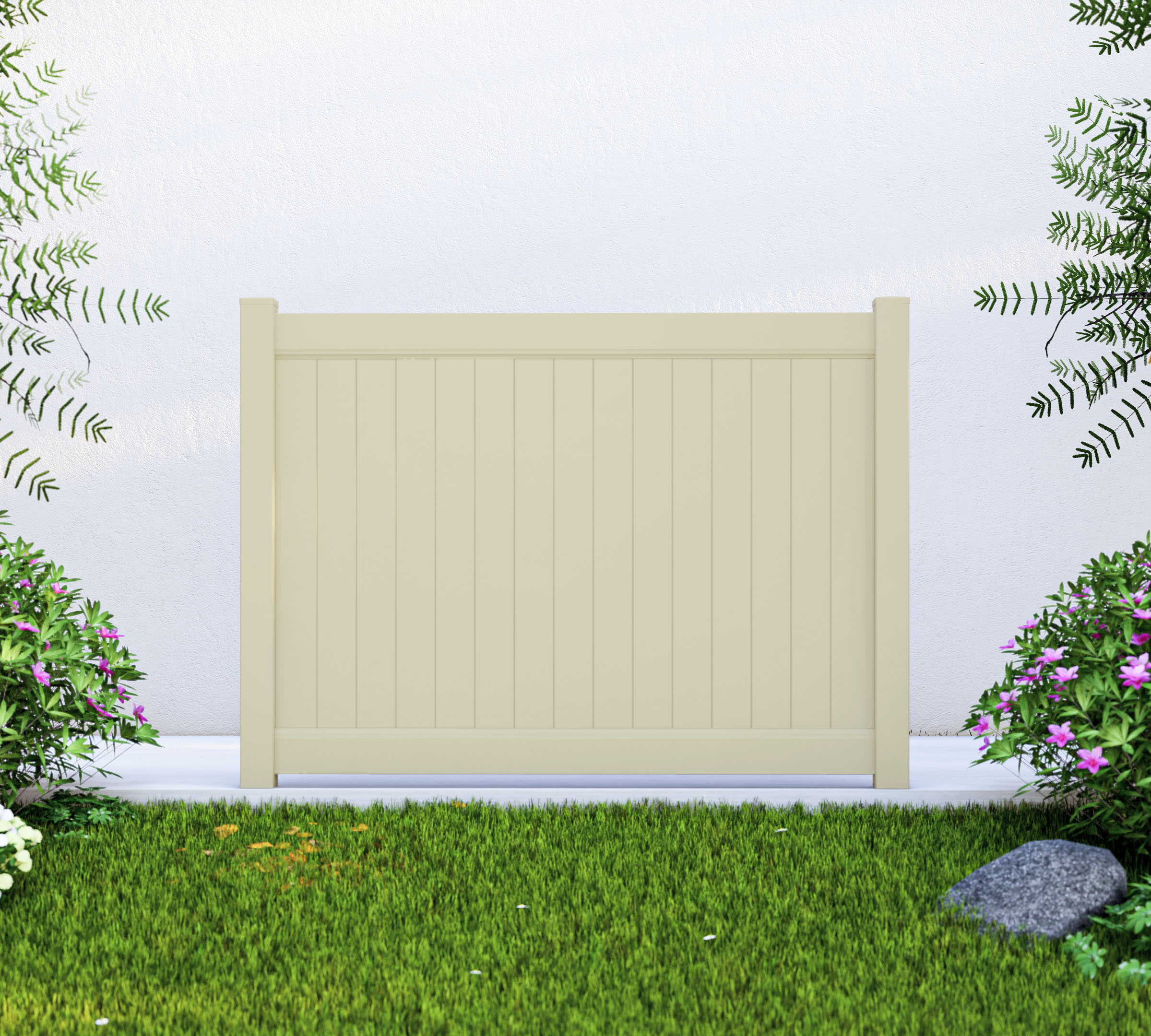
Raw material quality creates the biggest gap between good and bad fences.
High-quality fences use brand-new virgin PVC resin, which has a complete molecular structure and stable toughness. It can bounce back after stress and is not easy to crack in low temperatures, perfect for long-term outdoor use. Most cheap thickened fences are made from recycled materials. After repeated high-temperature processing, their molecular chains break and age with lots of impurities. Even with the same panel thickness, toughness drops greatly. They look sturdy, but cannot stand years of strong sunlight and will age and deform easily.
UV-resistant formula is essential for Southern California’s harsh sunlight.
UV rays are the biggest enemy of PVC fences. Long-term direct exposure will cause fading, chalking and loss of flexibility. For premium fences, UV inhibitors are mixed evenly into the whole material, not just applied as a surface coating. Even if the surface gets scratched, the inner part still keeps anti-aging performance.
Professional installation directly determines your fence’s real lifespan.
Insufficient post burial depth, unstable bases and no reserved expansion gaps will keep panels under constant stress and deform, greatly shortening service life.
In short: thickness only decides how well the fence resists bumps. Virgin raw materials, UV-resistant formula and proper installation are what decide whether your fence can stay stable for 20 to 30 years. If you only chase low-cost thickened panels and ignore material quality, you will end up paying more to replace the whole fence later.