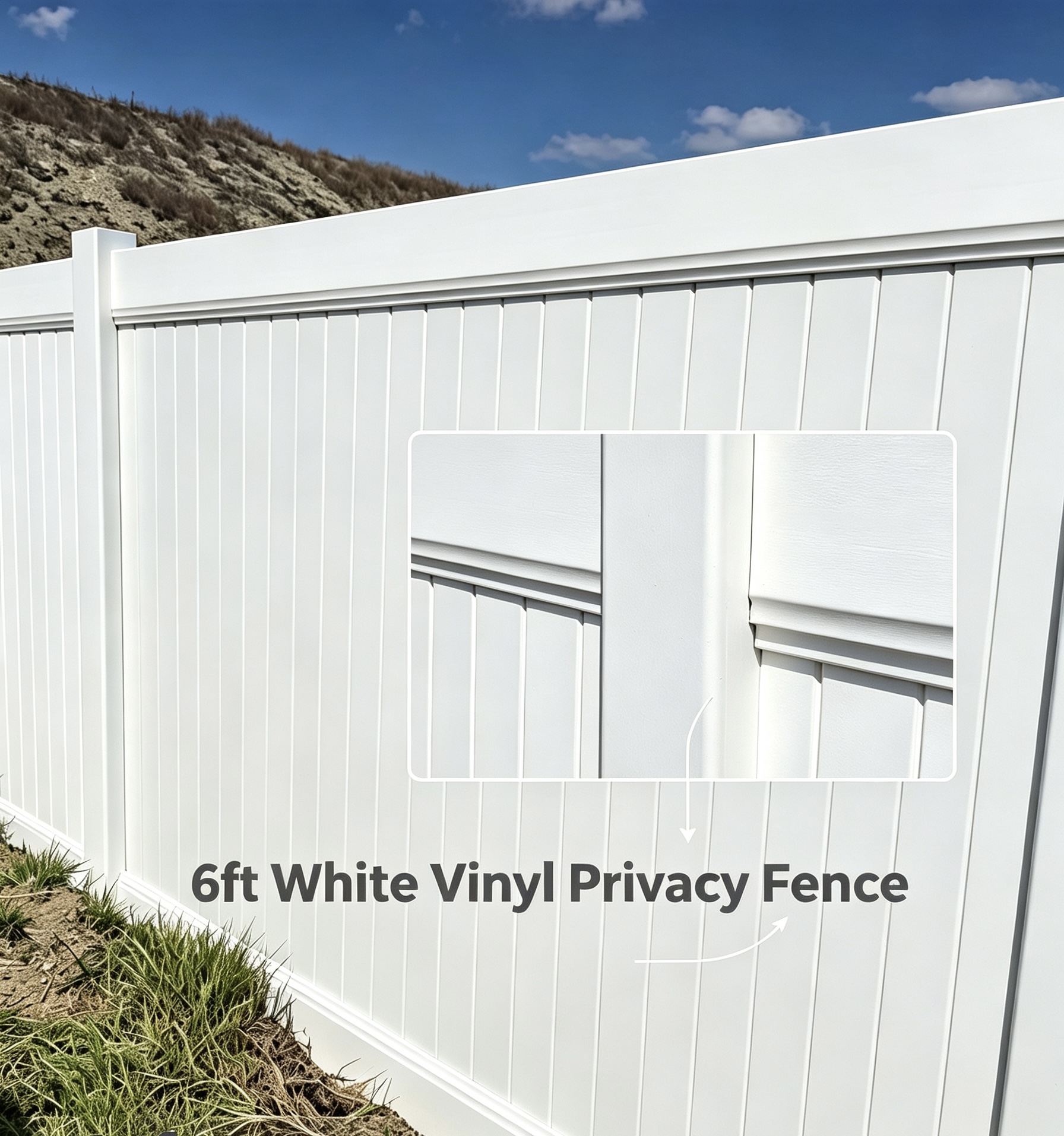
If you’re shopping for a backyard fence, this is almost always the first quiet question on your mind. Advertisements throw out different numbers, cheap options promise decades at a low price, and it can be hard to tell what lifespan you can genuinely count on. The honest answer is simple: a high-quality virgin vinyl fence, installed correctly, can serve your home for 25 to 40 years. Some well-cared-for units even hold strong longer. But this impressive timeline does not happen by accident. It all begins with what the fence is made of.
Not all vinyl is created equal. Many budget fences are built from recycled, reprocessed PVC mixed with unknown fillers. This material is thinner, inconsistent, and far more vulnerable to Southern California’s harsh sun. Over just a few years, it may turn yellow, become brittle, warp in heat, or crack after minor impacts. Our fences use 100% virgin vinyl resin, pure primary PVC blended with professional-grade UV stabilizers and impact modifiers during manufacturing. These additives are the quiet protection working every day: they block ultraviolet rays from breaking down the molecular structure, lock in the original tan, white or gray color, and give the panels flexibility to expand and contract with our hot days and cool nights without permanent deformation. There is no hidden recycled filler cutting corners here. This base material is the foundation of its long life. Even the thick, multi-chambered panel design adds rigidity, resisting wind pressure that would bend thinner, economy-grade vinyl.
Great material alone, however, will not guarantee decades of service. Poor installation can shorten the life of the best virgin vinyl fence dramatically. This is the detail many homeowners overlook. The whole fence stands or falls on its posts. We follow proven standards: posts are set deep enough, usually one-third of the total post length below ground, seated on gravel for drainage and anchored with properly cured concrete footings. Shallow posts shift when soil expands and contracts; over time, the fence leans, panels pop loose, and gates stop latching smoothly. Every post is checked plumb in two directions, panels are leveled carefully, and we leave time for concrete to fully cure before mounting rails and pickets. We use stainless or hot-dipped galvanized hardware, too — hardware that will not rust, bleed stains onto the vinyl, or swell and crack the panel channels years down the line. Clean spacing, proper gate framing, and thoughtful grading around the base also keep standing water away from post bottoms, avoiding slow, hidden wear.
Once installed, virgin vinyl’s biggest advantage reveals itself: its gentle maintenance routine. Unlike wood, it never needs staining, sealing, or painting. It will not rot, splinter, or attract termites. It does not corrode like iron fencing. That does not mean it is zero-care. A quick rinse with a garden hose once or twice a year washes away dust, pollen and leaf residue. For mildew or stubborn dirt, mild soap and a soft brush work perfectly; harsh abrasive scrubbers or strong solvents scratch the protective outer layer and speed up fading. A short annual check is all it takes: glance at gate hinges, tighten loose screws, and clear debris piled against the bottom rail. Small, simple attention keeps the fence looking fresh and performing reliably.
So what shortens a vinyl fence’s life? Constant heavy impact, improper installation, cheap non-virgin material, or long-term neglect of mildew buildup are the main culprits. When you pair premium virgin vinyl with careful, code-minded installation and light seasonal cleaning, you are not just buying a fence for privacy or curb appeal. You are investing in a boundary that will stay straight, keep its color, and protect your yard through decades of sunshine, wind and everyday family life.