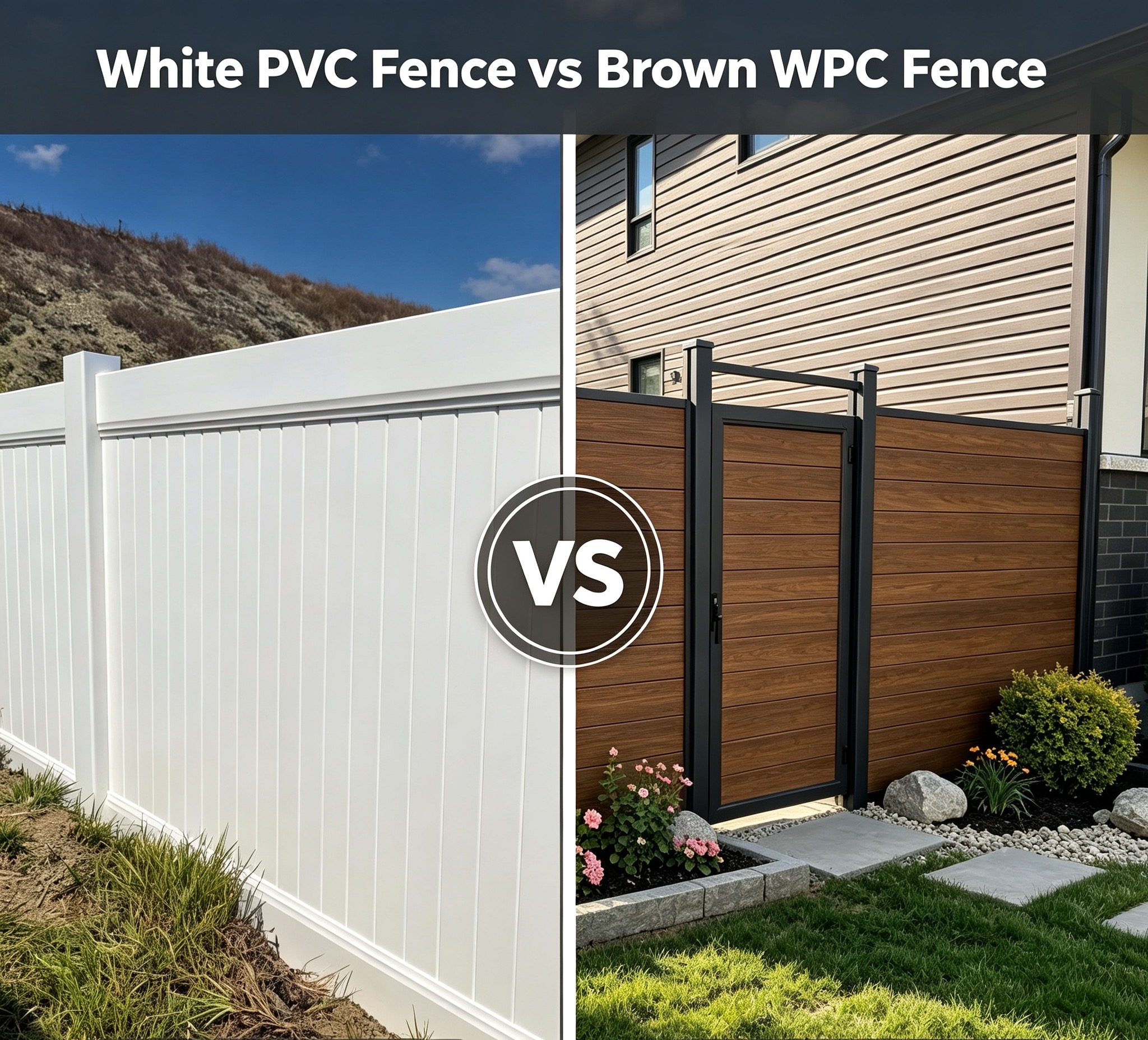
Choosing a new backyard fence is a big decision. It shapes your home’s privacy, curb appeal, maintenance routine and long-term budget. For Southern California homeowners, two of the most popular low-maintenance options are WPC composite fence and Vinyl (PVC) fence. Both beat traditional wood in many ways, but they are not identical. Understanding their differences will help you pick the right fence for your yard, especially under SoCal’s harsh sun, heat and seasonal Santa Ana winds.
What Is WPC Fence?
WPC stands for Wood-Plastic Composite. It is made from a blend of recycled wood fiber and plastic resin, pressed into solid fence panels. Manufacturers add UV stabilizers to premium-grade WPC to stand up to intense sunlight. WPC was engineered to capture the warm look of natural wood without wood’s common weaknesses: rot, mold and termite damage.
Pros of WPC Fence
- Natural wood-like appearance WPC has deep wood grain texture. From a distance, it is hard to tell apart from real timber. It comes in brown, gray and weathered wood tones for a high-end backyard aesthetic.
- Strong structure & good wind resistance WPC panels are denser and stiffer than hollow vinyl panels. It handles wind pressure better, which matters a lot during Santa Ana wind events across Southern California.
- High fade resistance Quality WPC contains UV inhibitors. It resists discoloration under constant California sunshine, so your fence keeps its rich color for many years.
- No rot, no termites Unlike natural wood, composite material cannot rot, and insects will not eat it. You never need to worry about bug infestation or water decay.
Cons of WPC Fence
- Higher upfront material cost WPC composite fencing kits generally cost more than standard virgin vinyl. If you have a very tight budget for a large project, this can be a drawback.
- Heavier panels WPC is heavier than vinyl. It requires more labor during delivery and installation.
- Textured surface traps dirt The wood grain texture can catch dust, mud and organic debris. Occasional rinsing is needed to keep it clean.
What Is Vinyl (PVC) Fence?
Vinyl, also known as PVC, is a plastic-based fencing material. Most residential vinyl fence panels are hollow extruded profiles. Premium vinyl uses virgin resin mixed with UV blockers, while cheaper options use recycled plastic. It was designed as a completely paint-free fencing solution.
Pros of Vinyl (PVC) Fence
- Great value for large projects High-quality virgin vinyl usually costs less per linear foot than WPC. It is a popular pick for homeowners wanting full privacy without overspending.
- Ultra-low maintenance The smooth non-porous surface is easy to clean. Just rinse it with a garden hose. No painting, staining, sealing or sanding required for decades.
- Lightweight and easy to install Vinyl panels are lighter, simpler to transport and faster to mount.
- Long service life Top-grade virgin vinyl holds up well in dry Southern California weather and can last 20+ years with proper installation.
Cons of Vinyl (PVC) Fence
- Plastic visual feel Even with molded grain patterns, vinyl still has a synthetic look. It cannot match the authentic wood texture of WPC.
- Structural limitations for hollow panels Hollow vinyl panels lack rigidity. As we covered in our wall topper guide, you cannot safely mount fence toppers on top of vinyl panels. Wind leverage will bend rails, warp panels and loosen posts over time.
- Cheap recycled vinyl fades fast Low-cost recycled vinyl does not have enough UV protection. It will turn chalky and fade quickly under strong SoCal sunlight. Always confirm you are buying virgin vinyl.
How To Make Your Final Choice
Pick WPC fence if:
- You prioritize realistic wood aesthetics and premium curb appeal
- You live in an area exposed to strong Santa Ana winds
- Your budget allows higher upfront material cost
- You want stiffer, more solid fence panels
Pick Virgin Vinyl fence if:
- You want a cost-effective privacy solution
- You prefer a smooth surface that is very easy to wash
- Low maintenance is your top priority
- You do not plan to add wall toppers to your fence later
Final Thought
Neither option is universally “better”. The right fence depends on your aesthetic preference, budget, wind exposure and future renovation plans. Both WPC and premium virgin vinyl outperform wood fencing in Southern California’s tough climate.